From the sandbars of the Chambal to the banks of the Ganga, Parveen Shaikh is building a community-led conservation movement to protect one of India’s most distinctive river birds.
Wildlife conservation is often associated with forests, national parks and some of India’s best-known animals. But along the country’s rivers, conservationists are fighting a quieter battle — one that involves seasonal sandbars, nesting birds and communities whose lives are closely connected to the waterways.
Among those working on the frontline is Parveen Shaikh, whose conservation efforts focus on the endangered Indian Skimmer. In 2026, her work received international recognition when she was awarded the prestigious Whitley Award, an honour often described as the “Green Oscars” of conservation.
Who Is Parveen Shaikh?
Parveen Shaikh is a conservationist associated with the Bombay Natural History Society (BNHS). Her work centres on riverine birds and the fragile habitats on which they depend.

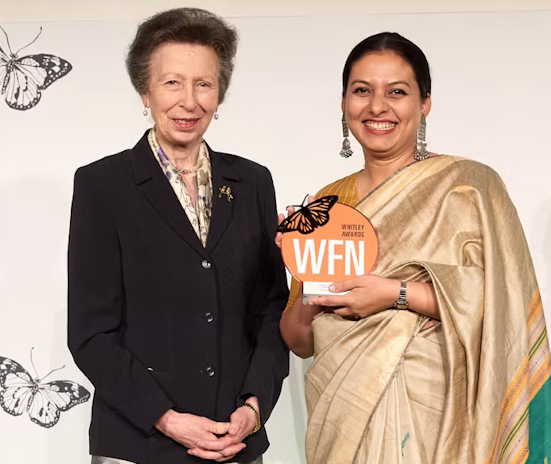
Parveen Shaikh Wins 2026 Whitley Award to Expand Community-led Riverine Protection for the Indian Skimmer
Her current conservation programme, “Skimmer Guardians: Protecting Riverine Birds and Their Habitat,” focuses on the Indian Skimmer and combines field research with community participation. The project has been recognised by the Whitley Fund for Nature as a 2026 Whitley Award-winning initiative.
Rather than relying only on conventional wildlife protection, Shaikh’s approach brings local communities directly into conservation.
Why the Indian Skimmer Needs Protection
The Indian Skimmer is one of India’s most unusual river birds. It has a distinctive bright orange bill and feeds by flying low over the water, using its bill to skim the surface and catch fish.
The species has disappeared from much of its historical range as riverine habitats have been degraded. India is now home to more than 90% of the world’s breeding population, making conservation work in the country particularly important for the species’ survival.
Indian Skimmers generally breed on seasonal river sandbars and mid-river islands. These areas can be extremely vulnerable to changes in river flow, human activity and disturbance.
Boat traffic, sand mining, pollution and other pressures have affected India’s major river systems, including the Chambal, Yamuna and Ganga. For birds that depend on exposed sandbars to raise their young, even relatively small changes to their nesting habitat can have serious consequences.
The “Guardians of the Skimmer” Approach

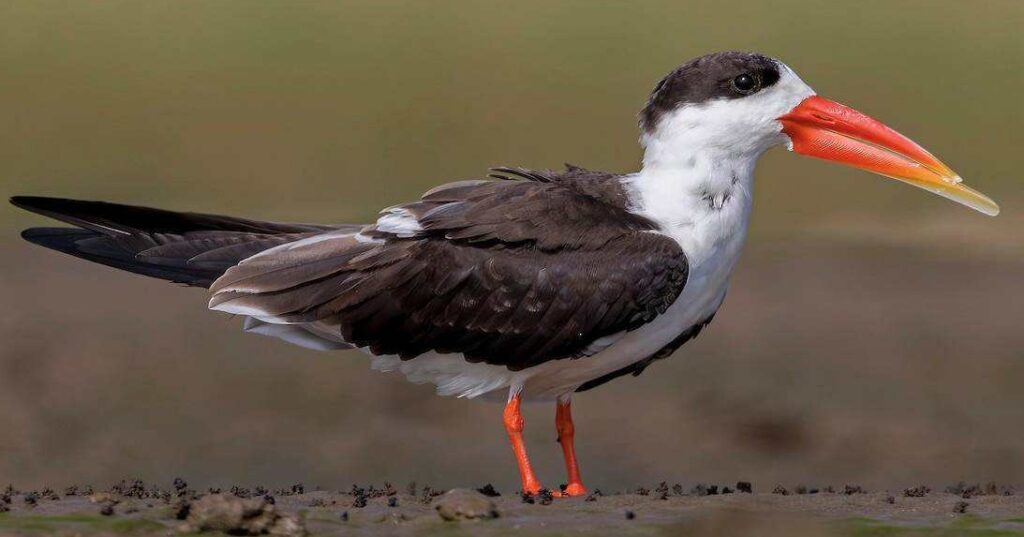
Indian Skimmer Bird
One of the most distinctive aspects of Shaikh’s work is her community-based conservation model.
Under the “Guardians of the Skimmer” initiative, members of local communities are trained to monitor nesting areas and help protect birds during the breeding season.
These guardians can identify nesting sites, monitor nests and respond to threats such as predators, trampling and human disturbance. The programme also creates employment opportunities for people from communities that have historically depended on agriculture and livestock.
The idea is simple but powerful: instead of viewing local residents only as people who might threaten wildlife, the project makes them partners in protecting it.
A Remarkable Recovery Along the Chambal
The community-led approach has already produced encouraging results along the Chambal River.
According to the Whitley Fund for Nature, the Indian Skimmer population in the project area has increased by 150% to nearly 1,000 individuals in eight years. The organisation attributes this recovery to the protection and monitoring work carried out through the community-based model.
For Shaikh and her team, these numbers represent more than a conservation statistic. Each successfully protected nest and each chick that survives the breeding season can be a sign that damaged river habitats can still support wildlife when the right protection is put in place.
Taking the Conservation Model to the Ganga
The 2026 Whitley Award will help Shaikh and her team expand their work beyond the Chambal.
A major next step is to take the community-led conservation model to Prayagraj in the Ganga Basin, an area where Indian Skimmers are also found.
The project will focus on:
Monitoring riverine bird nests and hatchling survival
Identifying vulnerable sandbars
Training local community guardians
Protecting nesting sites from disturbance and predators
Increasing participation from young people and local stakeholders
Working with government agencies on river conservation
Testing artificial nesting platforms for riverine birds
The expansion is significant because the Ganga is one of India’s most important river systems, supporting millions of people as well as a wide range of wildlife.
Why Community Participation Matters
Protecting a species such as the Indian Skimmer is not simply about protecting individual birds. It means protecting the river habitats where they feed, breed and raise their young.
That makes local participation especially important.
People living close to rivers understand seasonal changes, river conditions and local pressures in ways that can complement scientific monitoring. By training community members to become conservation guardians, Shaikh’s programme seeks to turn that local knowledge and presence into a conservation advantage.
The model also creates a stronger connection between wildlife protection and local livelihoods.
Parveen Shaikh’s 2026 Whitley Award
Shaikh received the 2026 Whitley Award, presented at the Royal Geographical Society in London on April 29, 2026. The award was presented by HRH The Princess Royal.
Her award-winning project is supported by the Corcoran Foundation and focuses on expanding protection for the Indian Skimmer and strengthening community-led riverine conservation.
The recognition has brought international attention to both Shaikh’s work and the challenges facing India’s river ecosystems.
More Than Saving One Bird
Parveen Shaikh’s work is ultimately about more than the Indian Skimmer.
Healthy rivers support wildlife, agriculture, fisheries, local communities and millions of people’s livelihoods. Protecting riverine habitats can therefore have benefits that extend well beyond a single species.
Her conservation model demonstrates how scientific research and local participation can work together. It also shows that protecting endangered wildlife does not always require separating people from nature. In many landscapes, bringing people into conservation may be the key to making it work.
As Shaikh’s project moves from the Chambal towards the Ganga, the Indian Skimmer’s future will depend on how effectively these partnerships can be built and sustained.
For a bird that has lost much of its former range, the return of healthy nesting populations would be a significant conservation success. And for India’s rivers, it could be another reminder that protecting biodiversity and protecting human livelihoods can go hand in hand.
Frequently Asked Questions
Who is Parveen Shaikh?
Parveen Shaikh is an Indian conservationist associated with BNHS who works to protect the endangered Indian Skimmer and its riverine habitat.
What is Parveen Shaikh known for?
She is known for the community-led Guardians of the Skimmer conservation programme, which trains local people to help protect Indian Skimmer nesting sites.
Which award did Parveen Shaikh win in 2026?
She received the 2026 Whitley Award for her work on community-led conservation of the Indian Skimmer.
Where does her conservation work take place?
Her work has focused particularly on the Chambal River, with the 2026 project expanding the approach to Prayagraj in the Ganga Basin.
Why is the Indian Skimmer important?
India holds more than 90% of the species’ global breeding population, making the country’s river habitats crucial to the bird’s survival.